
A tragedy. And an important question that must be asked.
Will Travers OBE, Born Free’s Co-Founder and Executive President, responds to the tragic tiger-related human fatality at Yorkshire Wildlife Park and asks whether current zoo safety standards do enough to effectively prevent people entering dangerous-animal enclosures.
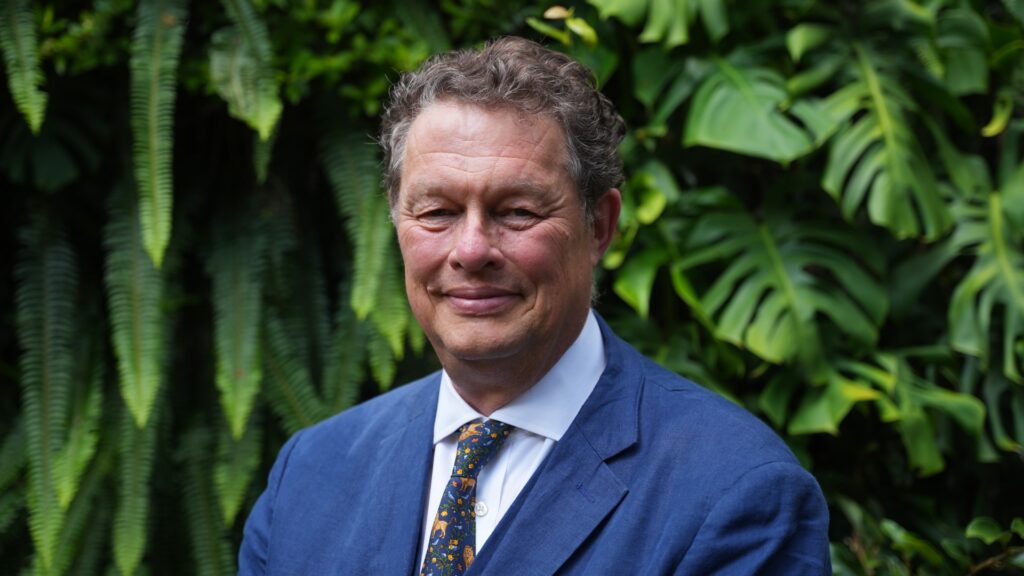
Will Travers OBE (c) George Leakey
What a tragedy.
First and foremost, my heartfelt thoughts are with the family and friends of the man who so tragically lost his life at Yorkshire Wildlife Park.
My thoughts are also with the staff, visitors, and emergency responders caught up in this deeply distressing incident. They will have witnessed and experienced something no one could possibly have expected when the day began.
And we are mindful of Altai, a wild animal placed in an extraordinary situation through no fault of his own.
We must not speculate
Right now, we simply do not know exactly what happened.
We do not know how or why the man entered the enclosure. We do not know whether any particular measure might have prevented him from doing so.
Until the facts have been established, it would be wrong to speculate. A man has lost his life. A family is grieving. Many others have been deeply affected.
This must be treated with compassion and respect. That includes not viewing or sharing the deeply distressing footage of the incident.
But an important question must be asked
Current zoo standards contain detailed provisions designed to keep dangerous wild animals securely within their enclosures and prevent their escape. They also address locked doors and gates, restricted areas, zoo perimeter security and stand-off barriers intended to prevent people coming into direct contact with Category 1A Hazardous Animals.
But do they say enough about preventing people getting into an enclosure? Are the standards equally clear and robust when it comes to ensuring that the construction and fencing of dangerous-animal enclosures prevent unauthorised access from the outside?
Our initial review and our assessment of the Standards of Modern Zoo Practice suggests this requires much closer examination.
To understand what, if anything, could have prevented this tragedy, and minimise the risk of such a situation arising in the future, we need to know precisely how access was gained, what barriers and security measures were in place, and whether they functioned as intended.
Until those facts are established, it is simply too soon to prescribe a particular solution.
We are raising the issue with government
Born Free is writing to the Secretary of State for Environment, Food and Rural Affairs, the Minister responsible for zoo policy, and the Chair of the UK Zoos Expert Committee.
We are asking them to examine whether the newly updated Standards, as they relate to unauthorised public access to dangerous-animal enclosures, are sufficiently clear, robust, effective, and enforceable. We are also asking that the issue is considered in relation to zoo licensing, inspection and enforcement. If the facts surrounding this incident reveal lessons of wider relevance, those lessons must be learned.
This is not about rushing to judgement. It is not about pointing the finger. It is about asking a reasonable and necessary question in the hope that another family never has to experience such a terrible loss.
Surely, zoo safety must work both ways: keeping dangerous wild animals securely in, and keeping people safely out. Protecting people and protecting animals must go hand in hand.